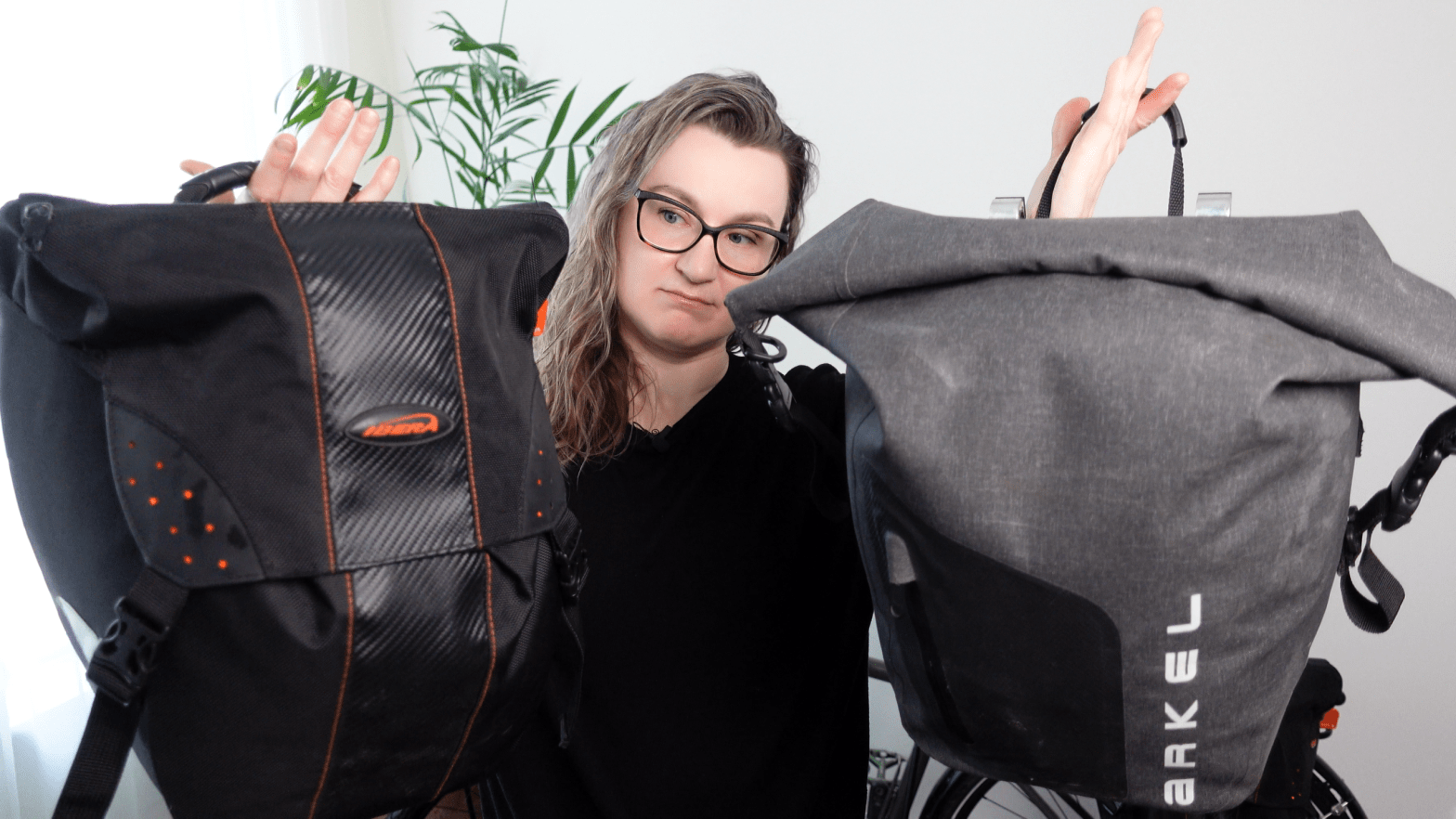
When I was brand new to the world of bicycle touring and commuting I had no idea what to pay attention to when buying new bike bags. I just went on Amazon and purchased a set of panniers with relatively good reviews. I wish I watched a view or two, as it would’ve saved me some money in the long term. But … we live and learn.
Here’s my attempt at demystifying the process for those new to the world of commuting and exploring by bike.
Intended Use
What are you going to be using the panniers for? Commuting or touring? An average commuting distance (based on my unscientific poll on Reddit) is about 13km/8mi one way, which translates to about 130km/81mi weekly (5 days).
While on tour, you could ride that distance in a day, which means that your panniers are exposed to a lot more wear and tear while on tour, than when commuting. This brings us to the second point, durability.
Material, Durability and Waterproofness
Typically bicycle panniers are made from nylon or polyester materials. Some panniers have an additional coating added to make them more durable, or waterproof. There’s an ongoing debate on whether you need waterproof panniers. Personally, I used water-resistant panniers for commuting – they came with a waterproof cover, and switched to waterproof panniers for touring. There are pros and cons to everything and here are a few points to consider when “engaging” in this debate:
| Pros | Cons |
|---|---|
| keep water out | can trap moisture inside the pannier leading to mould formation |
| no need to fiddle with external covers (which are easy to misplace) | material may not be breathable, leading to moisture accumulation and mould |
| streamlined design with some internal organization | lack of organizational components – external pockets |
| will protect expensive gear from water damage | can be expensive |
| water beads off the material and doesn’t soak the pannier | depending on material and design – can get heavier if water seeps through the top layer and is trapped between the top and the waterproof layers of the material |
Capacity and Design
How much space do you need? Panniers typically come as a set of two, typically, but not always. A 30L pannier system consists of two 15L bags. It’s difficult to know exactly how much space you might need, especially if you are just starting out. A 30L pannier set would work well for commuting purposes. If you are more of a minimalist, then 25L panniers are an option as well.
While material contributes to the durability of the pannier, the overall bag design does as well. Cheaper, budget panniers will start showing wear and tear faster and the added reinforcement components will not be available.

For example, my Arkel Orca 35L panniers have a plastic “shield” at the bottom of the pannier that protects the area from wear and tear caused by rubbing on the rear rack. On the other hand, my Ibera PakRak panniers have a plastic stiffener inside the pannier, but no additional reinforcing material on the outside. Details such as these will impact the longevity of the product.
An additional point to consider is whether you need organizational features – pockets. Do you need external or internal pockets, or are you OK without any organizational features? Do you need a laptop sleeve? Would you like for that sleeve to be removable? Do you need water bottle pockets? Do you have enough clearance for those on your bike? (make sure your foot doesn’t hit the pannier with any external bits attached). Figuring out your needs and wants will help you narrow down the best pannier for you.
Attachment System
There are a number of different attachment systems available on panniers, with the most common ones being hooks. Some attachment systems are fully adjustable, like Arkel’s cam lock, others offer limited or no adjustability. Consider the rack you are going to be using the pannier and if the pannier will fit the rack.
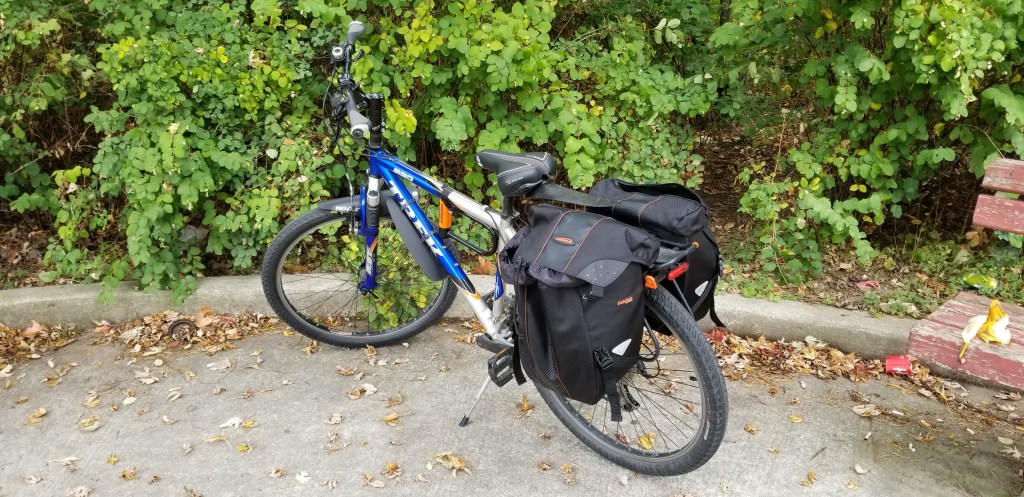
For my very first commuting setup, I ended up buying both the rack and the panniers to make sure everything fit well. The Ibera PakRak panniers have one hook that adjusts horizontally or vertically, and while this is limiting, it worked well on the Ibera rear rack. What I found is that the panniers don’t install well on other racks due to their inability to adjust.
An additional point to consider is the durability of the hardware used. Are the components made from cheap plastic, or are the components made from robust materials? The attachment system is one of the most important components on the pannier as that is what will keep the bag attached to your bike, and your contents secure. You don’t want the pannier flying off your bike mid-ride.
Warranty and Repair Services
If you want to keep your panniers for a long time, you may need to dip into potential warranty claims or seek repair services for the bags. Are those available, and how easy is it to reach out to the brand reps? For example, the Ibera warranty process is slightly more convoluted than the Arkel one. Additionally, the Ibera warranty is a limited 2-year warranty that is only available for the original owner, whereas the Arkel warranty is a lifetime warranty and can be transferred if you decide to sell the panniers. This is another piece to consider when you decide to spend your money on a product.
In Conclusion
The points in this post were ones I should have considered when buying my first set of paniers, but in reality, I saught the collective experience of Amazon.ca in deciding on my first set.
I’d love to hear from you – what do you consider when buying new panniers? What is important to you?
Thanks for reading!
⚠ Some links in this post are affiliate links, which means that I will get a small commission if you make a purchase. This is at no additional cost to you.
 Wheels on a Bike
Hi Agnieszka.
Good luck with the new blog.
I have never been touring yet but hopefully later in the year and I will use what I have at the time no matter how cheap or unfashionable it may be to see how it will work out.
So, I have only used panniers as big bags for shopping and commuting so far.
I bought a REALLY cheap €8.99 or €9.99(?) 20 litre each Crivit roll tops from Lidl in Ireland 5 years ago.
I have seriously overloaded them with both weight and volume and to my genuine surprise, they have held together!!! There is a taped seam on one with a side zip that’s coming apart but I still use them all the time but less often for large loads since I got a bike trailer.
Because of the expected impending self destruction of those panniers, last year I saw and took a chance and bought a pair of Sahoo brand 20 litre each fold/roll top types from AliExpress for €44 for the pair.
They look absolutely beautiful and seem good quality and open up to at least double the volume for shopping or whatever. Quick release on and off system and adjustable support for stability but I only used them twice after getting them to test them out and put them away until the old ones give up the ghost so I can’t comment on the durability unlike the old ones.
So, a lengthy preamble.
Now to the chase……
But I discovered something about the shape and practicality of the bike bags.
Towards the bottom they have a shape that is a little sharper than a “U” but definitely not a “V”. Only over half the width of the bottom section is flat and it tapers up about 5 inches / 12cm.
My realisation is that heavy or wide sharp edged items resting on these narrowing towards the bottom tapered sides of the bags’ could possibly very quickly tear through the bags fabric. I always put heavy items on the bottom of the old bags and I can do this on a narrower “floor” with these too but I now need to fill up the tapered area either side for that 12cm’s or similarly support anything wide with sharp edges so it’s not resting on the tapered sides.
Yes, I know they were cheap.
And until I really put them to the test, in every other way they are big cavernous heavy waterproof bags and just exactly what I wanted. And at most, it’s an inconvenience and just something to be aware of when I’m packing or loading the bags.
But since then I have noticed a similar shape to quiet a few other much more expensive pannier bags’ and in future, whenever I’m shopping for a new set, I am going to be careful to actively avoid this shape and go for a wide, flat bottomed bag instead.
Nobody else may have even considered this as a flaw but I actually was really disappointed when I discovered this.
And that’s why I have put my little story here.
Can’t post a picture so here’s a link for anyone who wants to look……
2pcs Sahoo 10L/20L Mountain Road Bike Waterproof Bicycle Pannier Bag Cycling Back Rear Seat Trunk Bag Rack Pack Shoulder Bag
https://a.aliexpress.com/_mPWqJbO
LikeLike
I work from home now, but when I commuted, I used one nylon pannier with lots of compartments. It came with a bag to put over it if it was raining, but I didn’t bike in the rain. I used it once for off road touring, and it got a little dirt stained. I got some Ortliebs soon after for that purpose.
LikeLike